Joshua Scarpino | March 25, 2026 | AI Policy
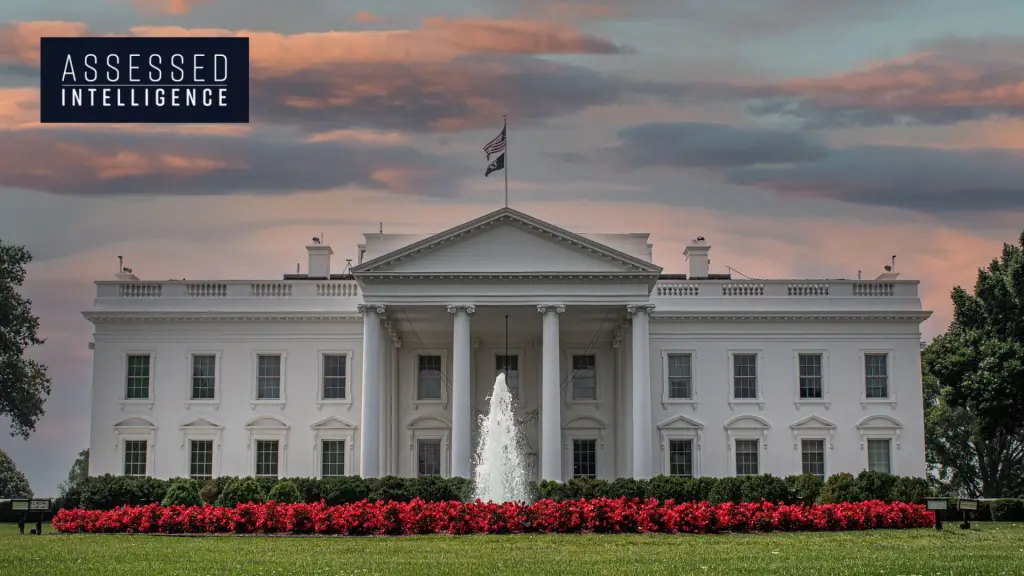
The White House released its National Policy Framework for Artificial Intelligence this month, transmitting seven legislative priority areas to Congress. The document does not carry the force of law. It establishes direction. Organizations operating AI systems or advising executives on AI risk need to understand what it does and does not require.
Seven Priorities, Uneven Weight
The framework covers child protection, community safeguards, intellectual property, free speech, innovation policy, workforce development, and federal preemption of state AI law. The practical implications are not evenly distributed.
Child protection provisions are the most immediately actionable. Congress is directed to establish age-assurance requirements for AI platforms, extend COPPA-era child privacy protections to AI systems, and require platforms accessible to minors to reduce exploitation and self-harm risk. Organizations with consumer-facing AI deployments should treat these as near-term compliance obligations, not hypothetical ones.
The intellectual property section governs by deliberate ambiguity. The Administration states it believes AI training on copyrighted material does not violate copyright law, then defers resolution to the courts. Congress is instructed not to intervene. Organizations using third-party data for model training carry unresolved legal risk that this framework has explicitly chosen not to resolve.
The innovation section makes its most consequential decision by omission. Congress should not create a new federal AI regulatory body. Regulation flows through existing sector-specific agencies: the FTC, FDA, SEC, and others. The result is a fragmented compliance landscape across multiple agencies with inconsistent frameworks and timelines. It also elevates the practical authority of voluntary standards like NIST AI RMF and ISO 42001; organizations that treat those frameworks as optional now occupy a documented gap.
The preemption provision is operationally significant for multi-state deployments. Congress is directed to establish a national AI standard and preempt state laws that impose undue burdens. The framework preserves state authority over traditional police powers, zoning, and states’ own AI use. The timing risk is real: until Congress acts, the existing patchwork of state AI regulations remains in effect and enforceable.
Three Things the Framework Does Not Do
The framework contains no mandatory requirements directed at private organizations. It defines no obligations for high-risk AI system developers or deployers. It contains no definition of AI. And it carries no enforcement mechanism; it directs Congress, not agencies.
Organizations that treat this document as current law are miscalibrated. Organizations that dismiss it as irrelevant are equally miscalibrated.
What This Means for AI Governance Programs
Three conclusions follow directly from the framework’s structure.
Sector-specific regulators will define AI compliance obligations for the foreseeable future. AI governance programs must map to domain-specific regulatory frameworks, not a unified federal authority that does not exist.
The absence of a mandatory federal standard transfers risk accountability entirely to the organization. Voluntary frameworks now carry more weight, not less.
The child protection and fraud prevention provisions identify the legislative priorities most likely to become statutory obligations in the near term. Organizations serving minors, seniors, or financially vulnerable populations through AI should begin compliance planning now.
BLUF
The White House framework favors innovation over precaution and industry self-governance over federal mandate. It signals where regulation is heading; it does not define where it stands today. Organizations that align their AI governance architecture to these principles now will absorb whatever statutes follow. Organizations that wait for statutory clarity will find the adaptation window considerably shorter.
Secure & Responsible Technology does not wait for legislation to define the standard.
Assessed Intelligence provides embedded leadership and continuous assurance through the ARISE Framework™, and regulatory readiness engineering for organizations deploying AI in complex operating environments. Learn more at assessedintelligence.com.