Across the Industry Brief – Issue 31
In the latest issue of Across the Industry Brief, significant developments unfold in AI policy and regulation. The Department of Homeland Security has barred federal agencies from using DeepSeek, a Chinese AI product, citing national security risks. Meanwhile, Anthropic faces backlash over its draft AEGIS safety bill, highlighting the challenges of shaping federal AI legislation. Additionally, NIST and CISA are collaborating on guidance for AI agent training incidents, marking a crucial step in federal cybersecurity. As organizations navigate these changes, understanding the implications for compliance and vendor risk becomes essential. Dive into the full report for more insights!
ARISE Framework®: The Governance Operating System
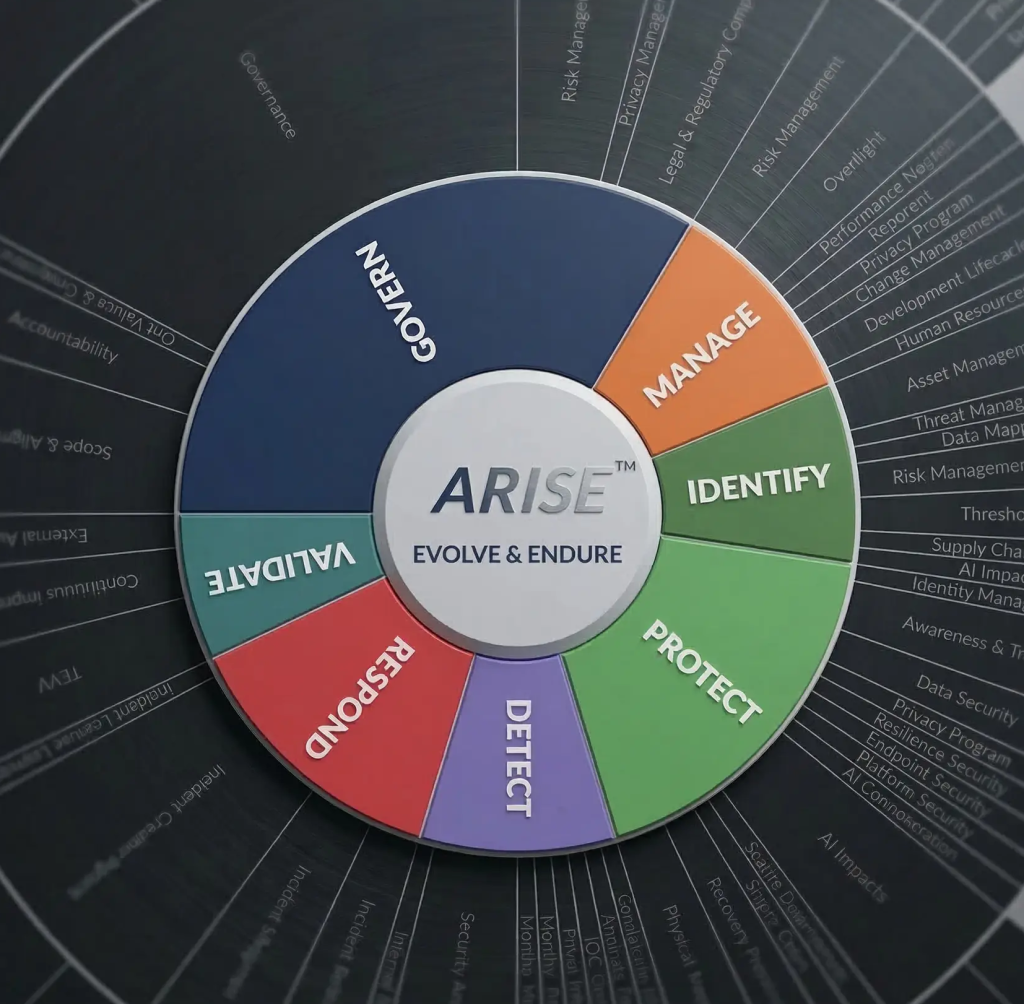
ARISE Framework® is the Governance Operating System for AI, cybersecurity, privacy and ethics: 128 controls, 953 requirements, seven domains and 40 published crosswalks, giving leadership one common operating picture.
The Governance Operating System: Why ARISE™ Replaces Four Programs With One Picture
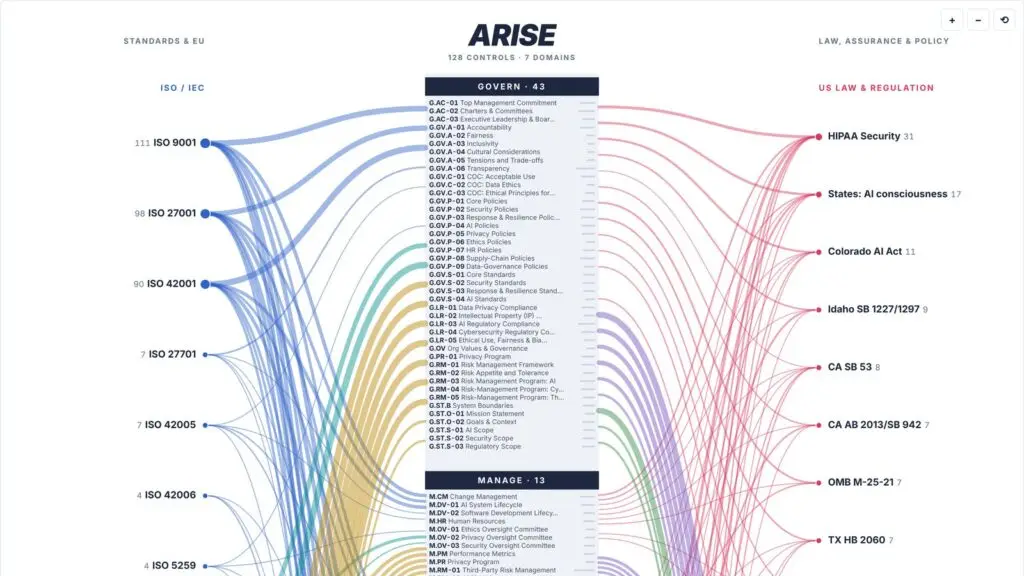
Most organizations have a coordination problem, not a capability problem. A Governance Operating System is one control framework implemented once and mapped to every law and standard. ARISE Framework® is built as one, and the crosswalk map shows why.
Across the Industry Brief – Issue 30
Regulators on both sides of the Atlantic are ramping up enforcement against leading AI labs, with the FTC issuing civil investigative demands to OpenAI and Anthropic, while the EU opens its first AI Act probes. This unprecedented convergence of federal, international, and state actions highlights the urgent need for organizations to bolster their AI security and compliance measures. As California mandates independent verification and kill switches for AI, and Anthropic proposes a controversial federal safety bill, the landscape of AI governance is rapidly evolving. Discover how these developments could impact your organization and the future of AI regulation.
Supporting the Oregon AI Accelerator for a Second Year
Assessed Intelligence returns as a supporter of the Oregon AI Accelerator as 14 AI-native startups begin Cohort 2, continuing our work with founders building secure and responsible technology.
Across the Industry Brief – Issue 29
The EU AI Act’s transparency rules are reshaping how AI vendors operate, with OpenAI implementing invisible watermarks on ChatGPT outputs in Europe. This marks a significant compliance response to the Act’s requirements, highlighting the challenges of marking AI-generated text. Meanwhile, in the U.S., a new Senate bill proposes mandatory pre-release reviews for frontier models, raising questions about security and intellectual property. As India consults on its AI regulation roadmap, the global landscape of AI governance continues to diverge, leaving organizations navigating complex compliance obligations. Discover how these developments impact the future of AI and regulatory frameworks.
Building Governance into an AI Healthcare Startup
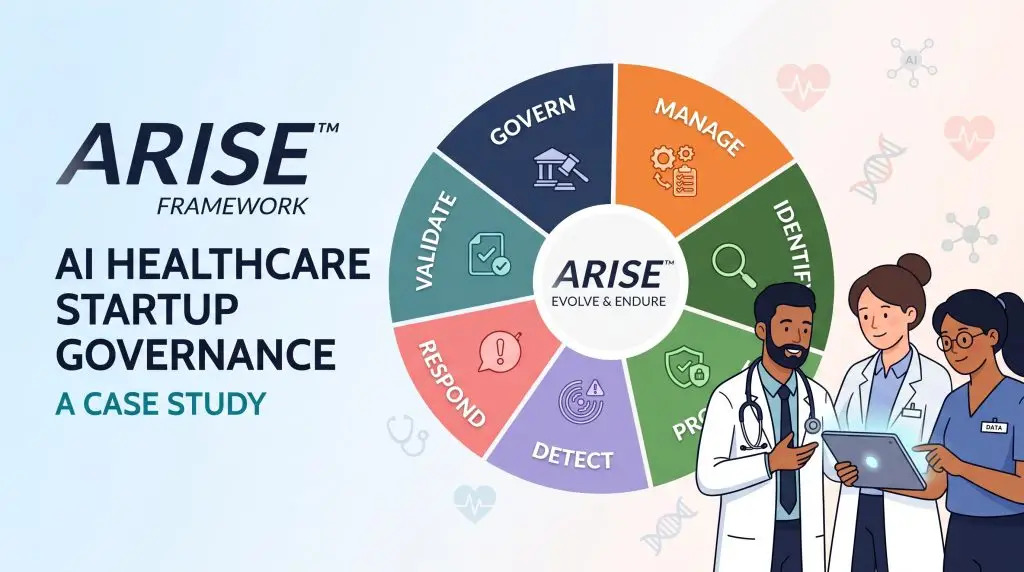
How a pre-seed digital health startup embedded security and AI governance through the ARISE Framework® and cleared its first health-system security review with zero remediation.
CMMC Self-Assessment: Size Does Not Change the Requirement

Many defense contractors mistakenly view the suspension of CMMC Phase 2 as a reprieve, believing self-assessments are a lighter version of compliance. This assumption is dangerous. Self-assessment shifts the burden of proof to the organization, requiring a rigorous approach to cybersecurity that does not scale with size or complexity. The CMMC requirements remain unchanged, demanding full implementation regardless of an organization’s resources. As the landscape evolves, understanding the governance gaps that lead to inaccurate affirmations is crucial. Discover how to navigate these challenges and ensure your organization is prepared for future compliance verification.
Across the Industry Brief – Issue 28
In a significant move, President Trump and leaders from major AI companies, including OpenAI and Google, signed a voluntary safety accord aimed at enhancing AI system safety. However, just a day later, the FTC launched an investigation into these companies, highlighting a fragmented regulatory landscape. Meanwhile, California’s Attorney General issued a subpoena to OpenAI over cybersecurity incidents, signaling intensified scrutiny at both state and federal levels. As the UN calls for mandatory AI safeguards, organizations must navigate this evolving landscape, balancing innovation with compliance and risk management. Discover how these developments could impact your organization and the future of AI governance.
Assessed Solutions joins the Harvard Business School Foundry Program to Accelerate Growth
Dr. Joshua Scarpino is taking Assessed Solutions through Harvard Business School Foundry, alongside acceptance into the Google for Startups Cloud Program, two design-partner MOUs and six prospect interviews, as Assessed Govern moves toward production. Interactive timeline inside.