
Initiative | Financial Inclusion
Know Your
Community.
Intelligent Financial Inclusion
Bridging rigorous AML/CFT compliance and inclusive financial access through Federated Learning, the ARISE Framework, and community-grounded behavioral analytics. Sovereign. Private. Scalable.
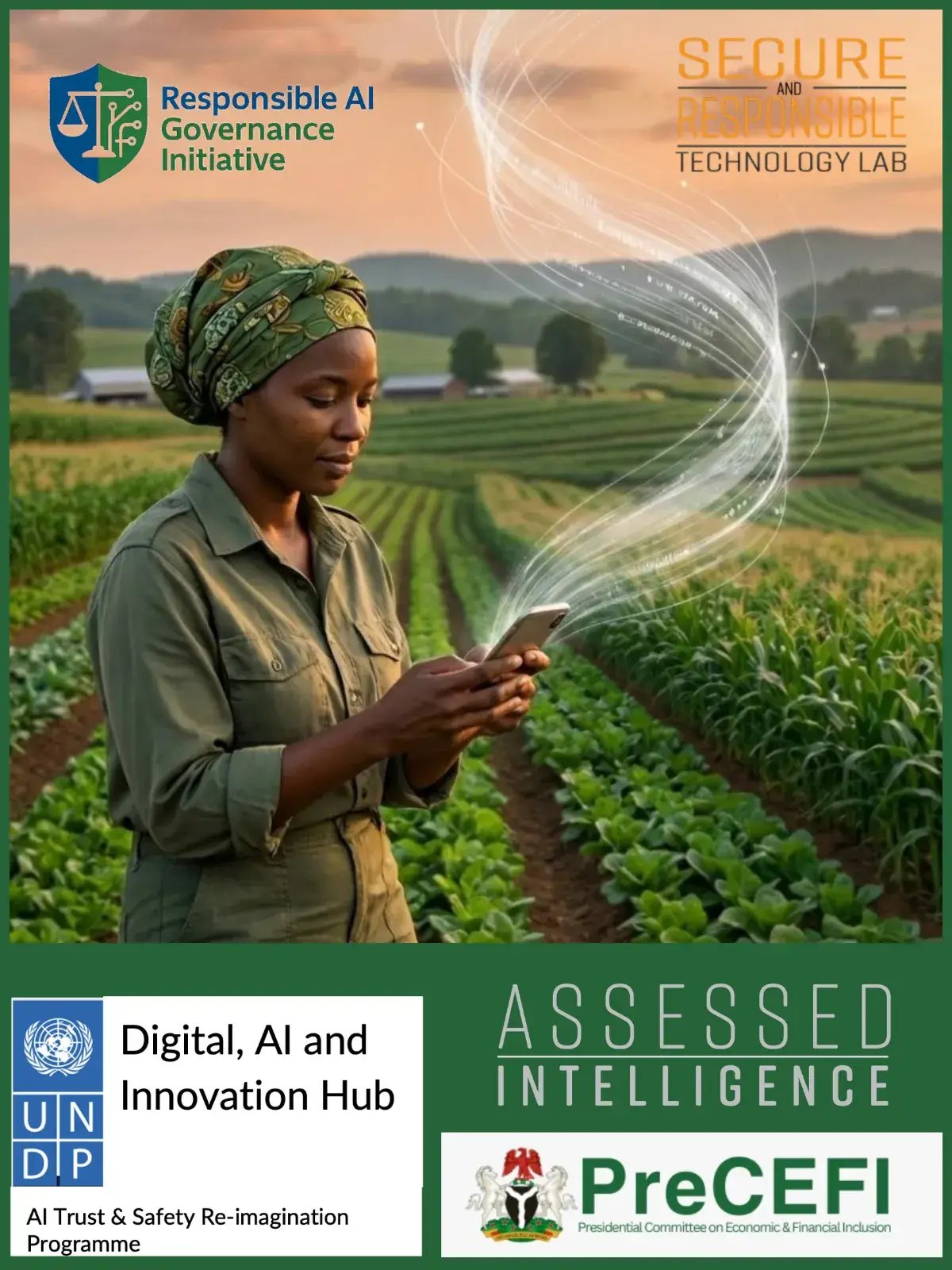
Partners and Supporters


The Challenge
Compliance Systems Designed for One World Are Excluding People From Another.
Financial Service Providers must meet strict Anti-Money Laundering and Counter-Terrorist Financing standards. But automated systems calibrated for Western financial behavior routinely flag legitimate local transactions as suspicious, locking out the people they are meant to serve.
The result is a paradox: the more rigorously compliance is enforced, the more financial exclusion compounds. Seasonal income cycles, community savings groups, and informal trade patterns are not red flags. They are the financial reality of billions.
AML/CFT False Positives Exclude Legitimate Users
Automated fraud detection built for global markets systematically misclassifies local financial behavior, resulting in account closures and credit denials for individuals who pose no risk.
Thin-File Customers Are Invisible to Standard Models
Individuals without formal credit histories are excluded not because they are risky, but because existing systems have no vocabulary for their economic activity.
Data Sharing Creates Sovereignty and Privacy Risk
Traditional collaborative model training requires raw customer data to move between institutions, creating unacceptable privacy and regulatory exposure for all parties.
One-Size-Fits-All Products Fail Underserved Populations
Without localised behavioral data, Financial Service Providers cannot design the tailored credit, savings, and insurance products that would genuinely serve the unbanked and underbanked.
36% of Nigerian Adults Lack Formal Financial Access
In Africa’s largest economy, the gap between financial system capacity and community-level reality is widest precisely where inclusion would have the greatest development impact.
World Bank 2025*
1.4B
People worldwide excluded from formal financial services, the foundational barrier the KYC initiative is built to dismantle.
EFInA Nigeria 2023*
36%
Of Nigerian adults lack access to formal financial services, in Africa’s largest economy and primary focus of the initiative’s first operational phase.
PreCEFI / EFInA 2023*
<0.5%
Of rural Nigerian women with clear entrepreneurial goals had access to formal credit in 2023, despite 10.2 million reporting active business aspirations.
Federated Learning Design
0
Raw customer data shared between institutions. The Federated Learning architecture enables collaborative model training with complete data sovereignty and privacy by design.
Know Your Community
Compliance Does Not Have to Mean Exclusion. We Are Proving It.
By integrating local behavioral context into automated systems, the KYC initiative bridges regulatory compliance with financial inclusion, without compromising the data sovereignty of individuals or institutions.
The Persona Engine
Behavioral Analytics Grounded in Local Financial Reality.
At the core of the KYC initiative is the Persona Engine, which classifies users based on behavioral analytics specific to their local context. Rather than treating customers as a monolith, these personas help AI systems and financial institutions understand the diverse ways communities interact with money.
The Persona Engine is trained through a Personalized Federated Learning framework that allows collaborative model improvement across multiple financial institutions without ever sharing or moving sensitive raw data. Models stay local. Insights are shared. Privacy and sovereignty are preserved by design.
How It Works
Federated Learning. Sovereign Data. Shared Intelligence.
The architecture ensures that financial institutions can improve fraud detection and inclusion outcomes collaboratively, without any institution ever seeing another’s raw customer data.
Key Objectives
Supporting the UN Sustainable Development Goals.
Economic Empowerment
By ensuring automated systems recognise legitimate livelihood patterns, the initiative enables individuals to access the credit and capital required to achieve long-term economic mobility, with particular impact for women and informal sector workers.
Financial Resilience
By reducing the risk of unintended account closures and algorithmic misclassification, the initiative ensures individuals can maintain stable access to financial tools through economic disruption, protecting the most financially vulnerable from systemic exclusion.
Financial System Innovation
The data architecture enables pro-poor supply-side innovation by providing Financial Service Providers with the localised behavioral intelligence necessary to develop tailored insurance, savings, and credit products that reflect local financial realities.
Project Spotlight
Beginning in Nigeria. Building for the World.
As the home of Africa’s largest economy and population, Nigeria serves as the primary testing ground for the KYC initiative’s first operational phase, in strategic partnership with the Presidential Committee on Financial Inclusion.
Project Spotlight: Nigeria
Operationalising the ARISE Framework Through a National Mandate.
In Nigeria, the KYC initiative is being operationalised through a strategic partnership with the Presidential Committee on Financial Inclusion (PreCEFI), represented by the Office of the Vice President. PreCEFI provides the executive mandate necessary to align AI-driven financial systems with national development goals.
The Reality
36% of Adults Lack Formal Financial Access
In 2023, fewer than 0.5% of rural women with clear entrepreneurial goals had access to formal credit, despite 10.2 million reporting active business aspirations.
The Barrier
Systems Calibrated for Western Markets
Traditional AML/CFT and fraud detection systems frequently misclassify common Nigerian transactional behaviors, including seasonal income and community-based transfers, as high-risk activity.
The Goal
Inclusive Behavioral Personas at Scale
Through PreCEFI, the initiative builds behavioral personas that allow FSPs to move beyond one-size-fits-all models and create tailored products for the unbanked and underbanked.
Three Operational Pillars
Strengthen Compliance and Stability
Drive Innovation and Empowerment
Foster Ethical Leadership
ARISE Framework
Built on Assessed Intelligence’s Governance Standard.
The KYC initiative applies the ARISE Framework across all system design, model governance, and institutional deployment decisions, ensuring that every component is Accountable, Responsible, Inclusive, Secure, and Equitable.
From persona model design to regulatory alignment and ethical governance, the ARISE Framework provides the structured assurance layer that allows financial institutions and governments to deploy AI-driven financial inclusion with confidence.
GOVERN
Policy frameworks and executive mandate for responsible AI deployment in financial systems.
IDENTIFY
Behavioral persona classification and risk surface mapping across participating institutions.
PROTECT
Federated Learning architecture ensures data sovereignty and privacy by design at every layer.
VALIDATE
Independent audit and attestation of model fairness, bias metrics, and regulatory alignment.
Get Involved
Join the Initiative.
We are actively expanding our network of forward-thinking Financial Service Providers, government agencies, and development organisations. If you are interested in implementing the ARISE Framework, participating in our workshops, or partnering on the Nigeria rollout, we would like to hear from you.
¹ World Bank (2025). Financial inclusion overview. worldbank.org
² Committee on Payments and Market Infrastructures (2019). New correspondent banking data. bis.org
³ World Bank Group (2016). De-risking in the financial sector. worldbank.org
⁴ EFInA (2023). Access to Financial Services in Nigeria. a2f.ng
Forged by Experience · Driven by Purpose · Built to Endure